How to Reduce Heat Gain with Green Roofs: A Thermal Guide
The escalating thermal intensity of urban environments has transformed the rooftop from a mere weather barrier into a critical theater for climate adaptation. As “heat island” effects exacerbate energy consumption and structural stress, the adoption of vegetated assemblies—commonly known as green roofs—has moved beyond aesthetic preference into the realm of essential building science. How to Reduce Heat Gain with Green Roofs. The challenge lies in transitioning from the theoretical benefits of greenery to a mathematically grounded understanding of heat flux, latent heat of vaporization, and the specific resistance values of living membranes.
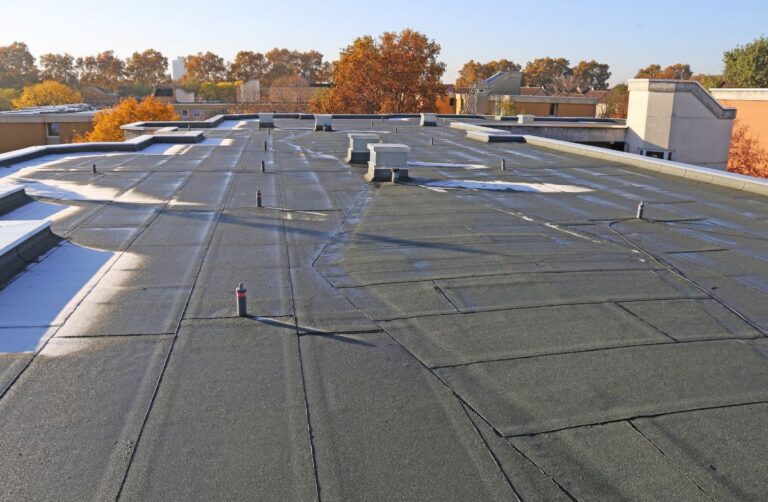
A sophisticated rooftop assembly does not simply “block” heat; it manages a complex thermodynamic exchange. While a standard bitumen or TPO roof acts as a massive heat sink, absorbing solar radiation and re-radiating it long after sunset, a vegetated system utilizes biological processes to intercept and dissipate that energy. This requires a precise calibration of substrate depth, plant physiology, and moisture retention. To ignore these variables is to risk a system that, under extreme drought or improper drainage, may fail to provide the very cooling benefits for which it was designed.
The objective of high-level thermal planning is to decouple the building’s interior climate from the external solar load. By integrating a living layer, developers can significantly lower the temperature of the roof membrane itself—often by as much as 60°F to 80°F during peak summer months. This reduction in the temperature gradient directly correlates to a decrease in conductive heat flow into the building envelope. This article provides a rigorous exploration of the engineering, biological, and economic factors involved in optimizing these systems for maximum thermal resistance and long-term structural viability.
Understanding “how to reduce heat gain with green roofs”
To address how to reduce heat gain with green roofs, one must look past the visual appeal of a “park in the sky” and examine the three primary mechanisms of thermal regulation: shading, insulation, and evapotranspiration. Shading is the most immediate; the foliage intercepts solar radiation before it reaches the growth medium or the structural slab. Insulation is provided by the substrate—a mixture of organic and mineral components—which acts as a thermal mass, slowing the rate of heat transfer through its density and trapped air pockets.
However, the most potent mechanism is evapotranspiration. Unlike passive insulation, which merely delays heat transfer, evapotranspiration actively removes heat from the system. As plants release moisture through their stomata and water evaporates from the substrate, the phase change from liquid to vapor consumes energy. This “evaporative cooling” ensures that the roof surface remains near the ambient air temperature, even under direct solar exposure. Without a consistent moisture strategy, this mechanism fails, turning the green roof into a dry, insulating layer that may lose much of its thermal advantage.
Oversimplification in this field often leads to the “generic greening” error—the belief that any plant on any roof will provide identical cooling. In reality, the leaf area index (LAI) of the chosen species and the specific gravity of the growth medium are decisive factors. A thin sedum mat on a shallow substrate provides significantly less thermal buffering than a deeply rooted intensive system with a complex canopy. Understanding how to reduce heat gain with green roofs requires a move toward performance-based design, where every millimeter of substrate and every leaf is evaluated for its contribution to the building’s energy balance.
Deep Contextual Background
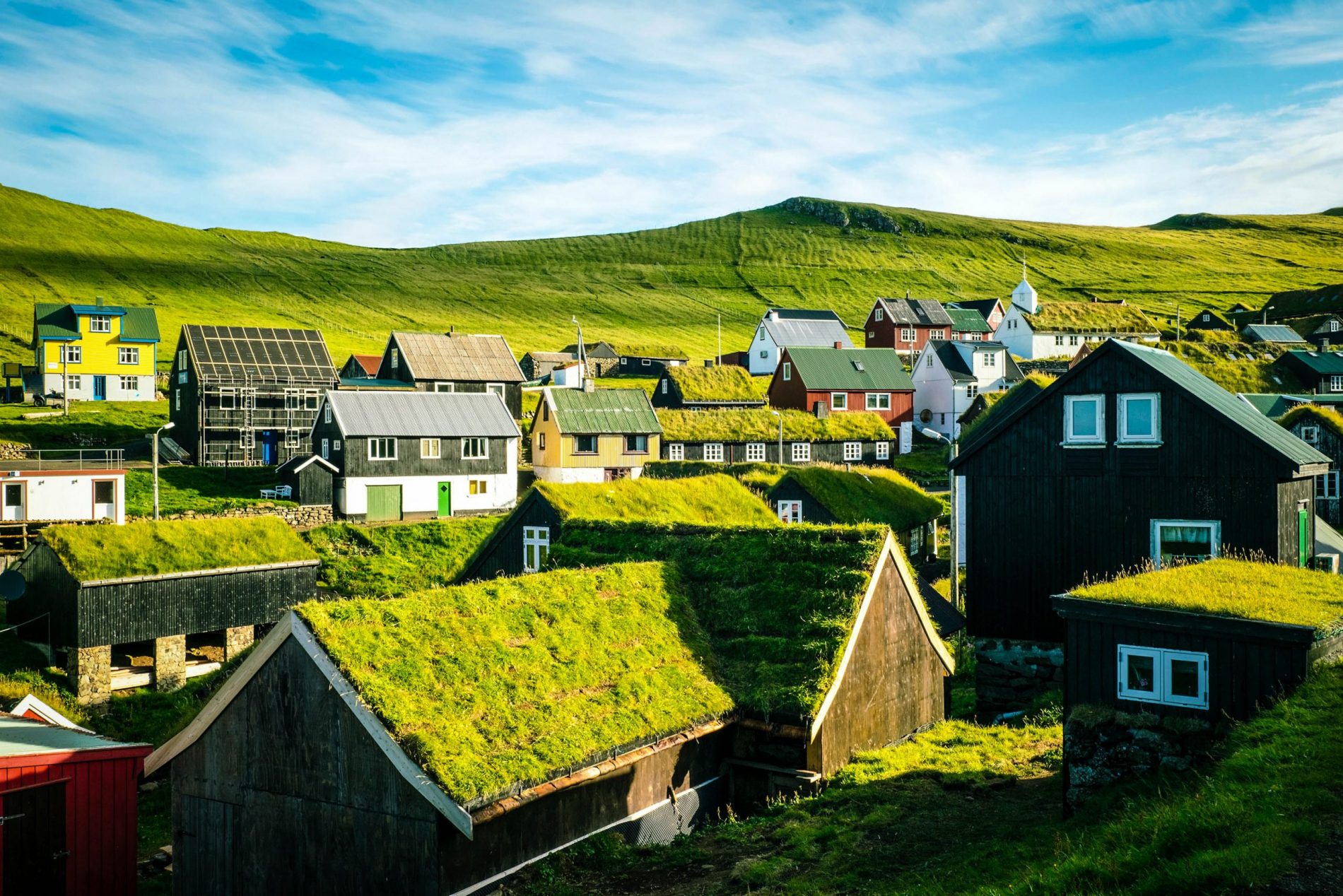
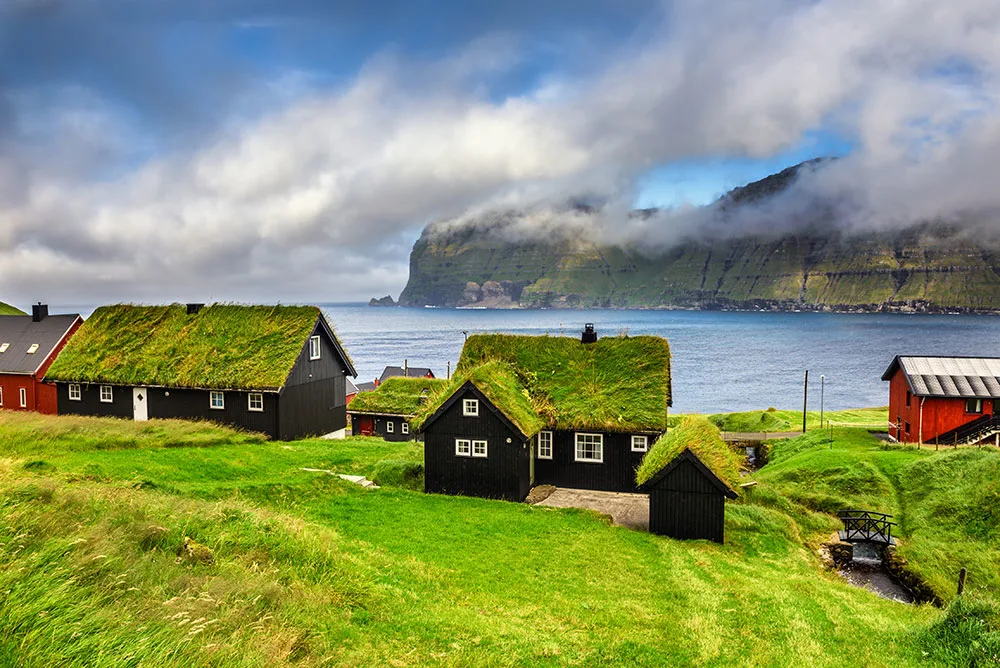
The use of vegetation as a thermal barrier is a practice rooted in vernacular architecture, from the sod houses of Scandinavia to the hanging gardens of the Mediterranean. Historically, these systems were utilized primarily for their insulating properties in extreme climates. However, the modern “Green Roof” as a technical assembly was codified in West Germany during the 1960s and 70s. This era marked the transition from accidental vegetation to engineered systems designed for stormwater management and fire resistance, with thermal benefits initially treated as a secondary byproduct.
The systemic shift occurred as urban planners recognized the “Urban Heat Island” (UHI) effect. As cities replaced permeable soil with asphalt and concrete, the ambient temperature rose, leading to a feedback loop of increased air conditioning use and higher external heat. In response, the focus of green roof engineering shifted toward albedo (reflectivity) and latent heat flux. The development of lightweight expanded clay and shale aggregates allowed for the installation of greenery on existing structures that could not support the weight of traditional topsoil.
Today, the context is defined by the integration of green roofs into smart building management systems. We are no longer looking at plants in isolation but as part of a “Blue-Green” infrastructure that manages energy and water simultaneously. The evolution of this field reflects a growing recognition that the building envelope is not a static wall but a permeable, biological interface that can be tuned to optimize the urban microclimate.
Conceptual Frameworks and Mental Models
1. The Thermal Lag Theory
This framework posits that the primary value of a green roof is not just “blocking” heat, but delaying it. By the time the peak solar load of noon penetrates the substrate and structural slab, the external air temperature has begun to drop in the evening. This “phase shift” allows the building’s HVAC system to operate more efficiently by shifting the cooling load to off-peak hours.
2. The Latent Heat Sink Model
In this model, the water stored within the green roof assembly is viewed as a thermal battery. During the heat of the day, energy is “stored” in the process of evaporating that water. Management using this model focuses on maximizing water retention within the substrate to ensure the “battery” never runs dry during a heatwave.
3. The Leaf Area Index (LAI) Hierarchy
This framework ranks vegetation based on its shading density. A high LAI means more leaf surface area per square foot of roof, which leads to higher interception of short-wave radiation. For maximum heat reduction, the goal is a “closed canopy” where no sunlight reaches the substrate surface.
Key Categories of Vegetated Systems
Choosing a system requires balancing weight, cost, and thermal performance.
| Category | Substrate Depth | Cooling Potential | Maintenance | Thermal Mechanism |
| Extensive (Sedum) | 2–4 inches | Moderate | Low | Shading / Reflection |
| Semi-Intensive | 5–8 inches | High | Medium | Evapotranspiration / Lag |
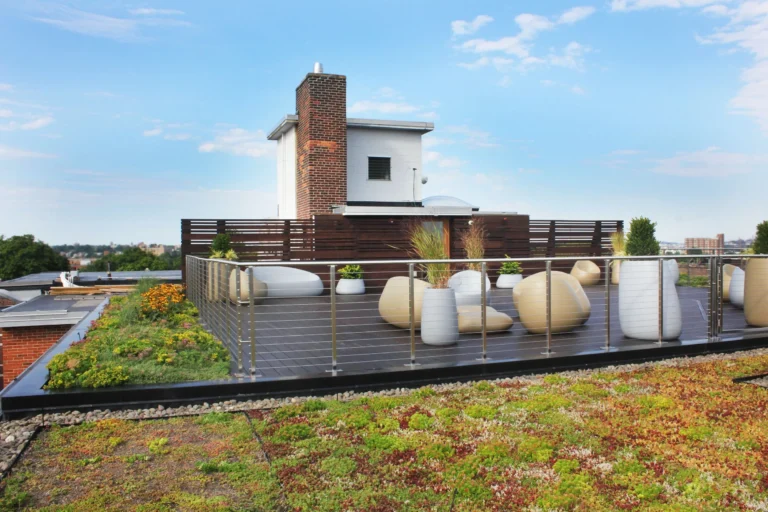
| Intensive (Park) | 8–24+ inches | Very High | High | Thermal Mass / Evapotranspiration |
| Modular Trays | 3–4 inches | Moderate | Medium | Flexibility / Localized Cooling |
| Bio-Solar Hybrid | 3–4 inches | High (Synergistic) | Medium | PV Cooling / Albedo |
Realistic Decision Logic
The decision-making process usually follows a “structural-first” path. If the building can support 100+ psf, an intensive system is preferred for its massive thermal lag. If the building is a retrofitted warehouse, an extensive sedum system is often the only viable option, focusing on albedo and surface-level shading.
Detailed Real-World Scenarios How to Reduce Heat Gain with Green Roofs
Scenario A: The Retrofitted Industrial Hub
An owner of an uninsulated metal-deck warehouse seeks to lower cooling costs. They install a 3-inch extensive system. Because the metal deck has high conductivity, the primary “mistake” to avoid is allowing the substrate to dry out. By integrating a low-flow irrigation system, they maintain the evapotranspiration rate, effectively turning the roof into a giant heat-exchange mat.
Scenario B: The Bio-Solar High-Rise
A developer wants both solar power and a green roof. They install solar panels above a sedum mat. The plants cool the air around the panels through transpiration, increasing the PV efficiency by roughly 5%, while the panels shade the plants, reducing their water demand. This creates a synergistic loop that maximizes heat gain reduction.
Scenario C: The Urban School “Cool Island”
A school in a dense urban core uses an intensive roof garden as an outdoor classroom. The deep substrate (12 inches) provides enough thermal mass that the floor below requires no air conditioning during the spring and fall. The second-order effect is a reduction in the ambient air temperature of the surrounding playground by 3°F.
Planning, Cost, and Resource Dynamics
The economic calculation for a green roof must account for “avoided costs,” such as extended membrane life and reduced HVAC sizing.
Estimated Thermal ROI and Cost Dynamics
| Strategy | Cost per sq. ft. | Est. Energy Savings | Life Extension of Roof |
| Standard White Roof | $2 – $4 | 10% | 15–20 Years |
| Extensive Green Roof | $15 – $25 | 15–20% | 40–50 Years |
| Intensive Green Roof | $35 – $60+ | 25–35% | 50+ Years |
The high initial CapEx is often offset by the fact that the green roof protects the underlying waterproofing membrane from UV radiation and thermal shock—the two primary causes of roof failure.
Tools, Strategies, and Support Systems
-
Moisture Retention Fleets: Specialized mats that sit beneath the substrate to hold water for “dry-day” evapotranspiration.
-
Capillary Irrigation: Delivering water to the roots rather than the surface to prevent evaporation waste while maintaining cooling.
-
Albedo-Optimized Vegetation: Selecting plants with light-colored or waxy leaves to reflect more sunlight.
-
Thermal Imaging Drones: Used to identify “hot spots” where vegetation is thinning or substrate is dry.
-
Electronic Leak Detection (ELD): Essential for maintaining a green roof over the long term without fear of ingress.
-
High-CEC Substrates: Media with high Cation Exchange Capacity that holds both nutrients and water more effectively.
-
Smart Controllers: Weather-synced irrigation that pre-waters the roof in anticipation of a heatwave.
Risk Landscape and Failure Modes
The primary thermal risk is the “Dry-Slab Effect.” If the plants die or the substrate becomes completely desiccated, the green roof can actually become a liability.
-
Failure Mode 1: Hydrophobic Soils. In extreme heat, some organic substrates become water-repellent. Water runs off the surface rather than soaking in, ending the cooling process.
-
Failure Mode 2: Biomass Accumulation. Overgrowth of invasive grasses can create a fire hazard in drought conditions.
-
Failure Mode 3: Structural Deflection. Improperly calculated saturated weight can cause the roof to “bow,” creating ponds that drown the vegetation and stress the structure.
Governance, Maintenance, and Long-Term Adaptation
A green roof’s thermal performance is not static; it evolves as the ecosystem matures.
-
Year 1–3 (Establishment): Focus on 90% coverage. Any bare substrate is a heat-gain vector.
-
Year 3+ (Stability): Managing biomass and ensuring drainage systems aren’t clogged by root migration.
-
Annual Audit: Measuring substrate depth. Wind erosion can thin the medium, reducing its R-value over time.
Measurement, Tracking, and Evaluation
-
Leading Indicator: Stomatal conductance of the vegetation (measured via leaf sensors).
-
Lagging Indicator: The “Delta-T”—the difference between the temperature at the top of the substrate and the temperature of the structural slab.
-
Documentation: Monthly energy bill comparisons (normalized for weather) to verify the reduction in HVAC cycling.
Common Misconceptions
-
Myth 1: Green roofs are just for insulation. Fact: Their primary summer benefit is evapotranspiration, which is an active cooling process, not passive insulation.
-
Myth 2: You can’t have a green roof in a desert. Fact: Xeriscaped green roofs use succulents like Sedum or Delosperma which are highly efficient at managing heat with minimal water.
-
Myth 3: All green roofs are heavy. Fact: Ultra-lightweight systems (sub-15 psf) are now available for residential retrofits.
-
Myth 4: The roof will leak. Fact: When installed correctly, the greenery protects the membrane from the thermal expansion/contraction that usually causes leaks.
Conclusion
The integration of living systems into the building envelope represents a fundamental shift toward biological resilience. Learning how to reduce heat gain with green roofs is an exercise in mastering the transition from solar radiation to latent heat. While the technical and financial hurdles are higher than those of a standard roof, the long-term rewards—in energy stability, structural longevity, and urban cooling—are profound. As we move toward a future of increasing thermal volatility, the green roof stands as a definitive tool for those who view the building not as a box to be cooled, but as an ecosystem to be balanced.