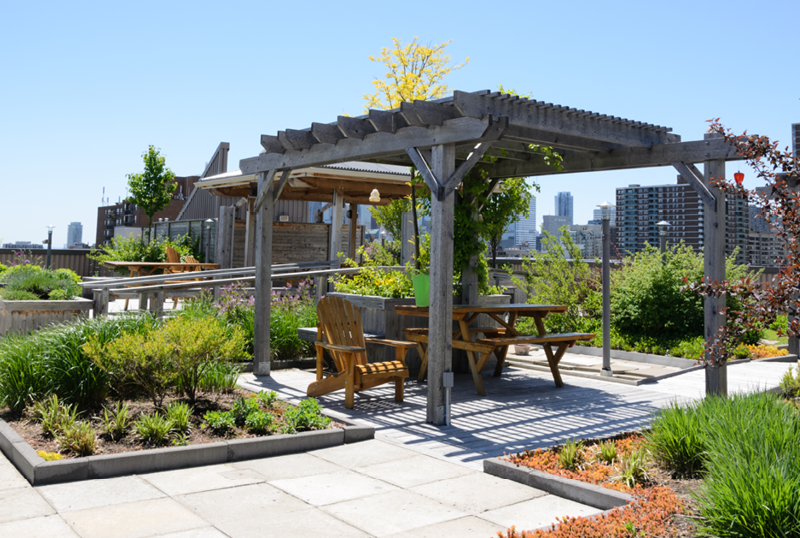
How to Manage Rooftop Garden Weight: The Complete Structural
The architectural imposition of a garden onto a rooftop is a complex negotiation between biological aspiration and structural reality. Unlike ground-level gardening, where the earth provides an effectively infinite foundation, rooftop cultivation operates within the rigid confines of dead loads, live loads, and the physics of the built environment. Every liter of water, every kilogram of substrate, and every structural timber added to an elevated space exerts a downward force that the building’s original designers may or may not have anticipated. How to Manage Rooftop Garden Weight. Consequently, the primary constraint of urban agriculture is not climate or light, but gravity.
Managing these forces requires more than a casual understanding of weight; it demands a systemic approach to load distribution and material density. A single large planter, when fully saturated by a heavy rainstorm, can transition from a manageable aesthetic feature to a structural liability in a matter of minutes. This volatility is compounded by the fact that many urban buildings—particularly those in older metropolitan cores—were engineered for snow loads or maintenance access, rather than the sustained, concentrated weight of wet soil and mature woody perennials.
The challenge of an urban gardener is to simulate the richness of a natural landscape while minimizing its physical mass. This involves a radical departure from traditional horticultural practices, replacing heavy topsoils with engineered mineral substrates and substituting ceramic pots with lightweight polymers or geotextiles. To engage with this discipline is to become a hybrid of a gardener and a structural analyst, perpetually aware of the invisible stresses beneath the decking.
Understanding “how to manage rooftop garden weight”
The technical necessity of learning how to manage rooftop garden weight lies in the distinction between static and dynamic loads. A static load—the empty planter or the furniture—is predictable. A dynamic load, however, is fluctuating; it includes the weight of the gardener, the variable water content in the soil, and the wind shear acting upon high-profile plants. A common misunderstanding in urban gardening is the reliance on “dry weight” specifications. In professional practice, one must always calculate for the “saturated weight” of the entire system, assuming a worst-case scenario where drainage is temporarily compromised during a torrential downpour.
Oversimplification risks often emerge when enthusiasts apply “per square foot” load averages across an entire roof. Buildings do not necessarily support weight uniformly. The perimeter walls, columns, and joist bearing points can often handle significantly higher loads than the center of a span. Therefore, managing weight is as much about placement as it is about the mass of the materials used. A 500-pound planter might be perfectly safe when positioned directly over a load-bearing column but could cause structural deflection or ceiling cracks if placed in the middle of a wide, unsupported roof section.
Furthermore, the concept of “weight” must be expanded to include the maturity of the plants. A sapling planted in a lightweight mix will eventually gain biomass, woody density, and a larger root ball, all of which contribute to a gradually increasing load over years of growth. Professional rooftop management involves forecasting this biomass accumulation to ensure the garden remains within the building’s safety margins for its entire lifecycle.
Deep Contextual Background: The Evolution of Elevated Loads
The history of rooftop gardening has transitioned from the heavy masonry and deep earth of the Hanging Gardens of Babylon to the thin-film technology of modern intensive and extensive green roofs. In the early 20th century, rooftop gardens were largely the province of luxury hotels and grand estates, utilizing massive structural concrete slabs that could support several feet of natural soil. These “intensive” gardens were essentially ground-level parks moved skyward, with little regard for weight optimization because the architecture was specifically over-engineered for that purpose.
The systemic shift occurred with the advent of “extensive” green roofing in Germany during the 1960s and 70s. This movement prioritized environmental benefits—such as stormwater retention and urban heat island mitigation—over recreational use. This led to the development of sedum mats and volcanic rock substrates that were light enough to be retrofitted onto existing industrial roofs. Today, the modern urban gardener operates in the middle ground: seeking the productivity of an intensive garden (vegetables, shrubs, small trees) while utilizing the weight-saving technologies developed for the extensive industry. This evolution has made rooftop gardening accessible to residential dwellers, but it has also increased the potential for structural error as non-experts attempt to navigate complex load requirements.
Conceptual Frameworks and Mental Models
1. The Point Load vs. Distributed Load Model
Imagine a person in snowshoes versus a person in stiletto heels. The mass is the same, but the pressure exerted is radically different. In rooftop gardening, large, flat-bottomed planters or “raised bed” systems distribute weight across a larger surface area, reducing the pressure on the roof membrane. Small, heavy pots on narrow legs create “point loads” that can puncture insulation or stress specific structural members.
2. The Saturated Soil Constant
A fundamental mental model is to treat soil not as a solid, but as a hydraulic sponge. Natural topsoil can weigh up to 100 pounds per cubic foot when wet. Engineered rooftop media (typically blends of expanded clay, shale, or perlite) are designed to stay between 40 and 60 pounds per cubic foot even when fully saturated. Using this “saturated constant” as the baseline for all calculations ensures a safety buffer.
3. The 3D Load Envelope
Weight management is not just downward; it is lateral. In high-rise environments, wind acts as a lever. A tall tree in a lightweight pot can act as a sail, transferring the “weight” of the wind into the pot and potentially tipping it or shifting the load distribution of the roof deck.
Key Categories and Variations
Successful weight management depends on the selection of substrate and container materials. The following table compares common materials based on their impact on structural integrity.
| Material Category | Typical Saturated Density | Structural Trade-off | Ideal Use Case |
| Natural Topsoil | 90–120 lbs/cu ft | Extreme weight; high nutrient retention | In-ground only; never for roofs |
| Engineered Media | 35–55 lbs/cu ft | Moderate weight; requires supplemental feeding | Modern intensive rooftop beds |
| Fabric/Geotextiles | Negligible (container weight) | Superior drainage; fast drying | Balconies with strict limits |
| Fiberglass/Resin | Low (container weight) | High durability; high cost | Permanent structural features |
| Terracotta/Ceramic | High (container weight) | Brittle; thermal mass; very heavy | Small accent pieces only |
| Sub-Irrigated (SIP) | Variable (includes water weight) | Constant weight due to reservoir | Areas with high sun/wind exposure |
Decision Logic for Material Selection
When the structural capacity of a roof is unknown, the default logic should be “Material Substitution.” If a desired plant requires a specific depth of soil, the weight is reduced by using a fabric pot instead of a ceramic one, and by filling the bottom third of the pot with inert, ultra-lightweight fillers like recycled foam or air-filled plastic (provided the roots do not require that depth).
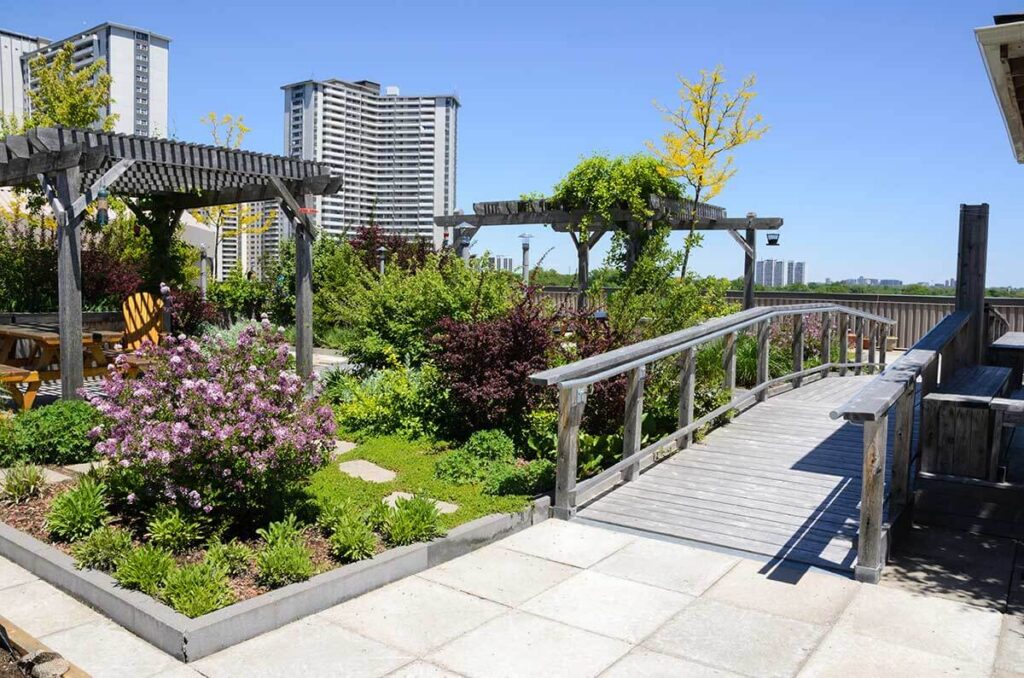
Detailed Real-World Scenarios How to Manage Rooftop Garden Weight
Scenario A: The Historic Brownstone Retrofit
-
Constraints: Joists are 100 years old; unknown load capacity.
-
Decision Point: The gardener wants a vegetable patch.
-
Optimal Path: Utilize the perimeter walls where the joists meet the masonry. Use shallow (6–8 inch) “long-form” troughs rather than deep square boxes to spread the weight.
-
Failure Mode: Concentrating three deep, water-heavy oak barrels in the center of the roof, leading to ceiling sagging in the rooms below.
Scenario B: The Modern High-Rise Balcony
-
Constraints: Strict 40 lbs/sq ft limit imposed by the HOA.
-
Decision Point: Privacy screening needed.
-
Optimal Path: Use tall, slender fiberglass planters filled with bamboo. Bamboo provides height with minimal trunk mass. Use a substrate of 70% perlite and 30% coco coir.
-
Second-Order Effect: Because the mix is so light, the pots must be tethered to the railing to prevent wind toppling, which introduces a new mechanical stress on the railing.
Planning, Cost, and Resource Dynamics
The cost of managing weight is often an “invisible” expense. While standard soil is cheap, engineered lightweight media can be three to five times more expensive.
| Component | Lightweight Option | Traditional Option | Cost Differential |
| Substrate | Expanded Slate/Perlite Mix | Bagged Garden Soil | +300% |
| Containers | Double-walled Resin | Glazed Ceramic | +50% |
| Drainage | Dimpled Plastic Mat | 2 inches of Gravel | -20% (labor saving) |
| Structural Advice | Structural Engineer Consultation | “Best Guess” | High upfront; priceless for safety |
The Opportunity Cost of Weight
Every pound saved in soil is a pound that can be used for something else—like a heavy outdoor table or more plants. By investing in ultra-lightweight materials, the gardener “buys” more creative freedom within the structural budget of the building.
Tools, Strategies, and Support Systems
-
Lightweight Drainage Plates: Instead of using heavy gravel at the bottom of pots, use plastic “egg-crate” drainage layers. They provide a massive air gap for roots with nearly zero weight.
-
Structural Joist Maps: Obtaining the original architectural blueprints allows the gardener to align heavy elements with the building’s “spine.”
-
Modular Decking: Using interlocking pedestals and tiles allows the weight of the flooring to be leveled and distributed, and provides easy access to the roof membrane for inspections.
-
Void Fillers: For deep decorative planters, use “false bottoms” or blocks of EPS (expanded polystyrene) to occupy space where soil isn’t needed.
-
Drip Irrigation with Sensors: By keeping soil moisture at a consistent, optimal level rather than “flooding” the beds, you prevent the weight spikes associated with manual overwatering.
-
Wind Bracing: Low-profile guy-wires for small trees prevent the “lever effect” from increasing the effective load on the roof during storms.
Risk Landscape and Failure Modes
The primary risk in managing rooftop gardens is Cumulative Loading. This occurs when several independent factors peak simultaneously.
-
Compounding Risks: A roof garden that is safe on a sunny day may fail during a “100-year storm” where heavy rain, high winds, and a clogged drain create a temporary swimming pool on the roof. The weight of standing water (62.4 lbs/cu ft) added to the saturated soil can easily double the total load.
-
The “Slow Creep”: As perennials grow, their woody mass increases. A wisteria vine that weighed 10 pounds at planting may weigh 200 pounds a decade later, not including the weight of its massive root system.
-
Membrane Compaction: Over time, heavy containers can compress the roof insulation or “bite” into the waterproofing membrane, leading to leaks that require the entire garden to be dismantled for repairs.
Maintenance and Long-Term Adaptation
Weight management is not a one-time calculation; it is a governance process.
The Annual Load Audit
Every spring, the gardener should evaluate the “biomass gain.” Pruning is not just an aesthetic choice on a roof; it is a weight-management strategy. Removing excess wood and thinning out heavy canopy reduces the static load and the wind-load profile of the garden.
Layered Checklist for Adaptation
-
Quarterly: Clear all scuppers and drains. A clogged drain is the fastest way to exceed weight limits via standing water.
-
Bi-Annually: Check for “pot sinking.” If a container is leaning or indenting the surface, it must be moved or its weight redistributed immediately.
-
Every 5 Years: Replace a portion of the organic matter in the lightweight mix. Over time, organic components break down into “fines” that can clog drainage and increase the density of the mix.
Measurement, Tracking, and Evaluation
How do you verify that you are successfully managing the weight?
-
Leading Indicators: Use a simple soil moisture meter. If the soil remains at 90–100% saturation for days after rain, your drainage is slow, and your “saturated load” is being held for too long.
-
Qualitative Signals: Observe the ceiling of the floor below for fine “spiderweb” cracks or door frames that suddenly become difficult to close—these are signs of structural deflection.
-
Documentation: Maintain a “Weight Ledger.” List every planter, its volume, the type of soil used, and its calculated saturated weight. This document is invaluable for structural engineers or future home buyers.
Common Misconceptions and Oversimplifications
-
Myth: “Gravel at the bottom helps drainage and weight.” Truth: Gravel is incredibly heavy and actually raises the water table in the pot. Use plastic spacers instead.
-
Myth: “If I can stand on the roof, it can hold a garden.” Truth: Human weight is a “live load” (temporary). A garden is a “dead load” (permanent), which stresses the structure in a completely different way over time.
-
Myth: “Aluminum planters are always the best choice.” Truth: While light, aluminum conducts heat rapidly, which can cook roots in summer, leading to the need for more water (which adds weight).
-
Myth: “Succulents are the best for weight.” Truth: While they need less soil depth, succulent leaves are 90% water. A large agave can actually be heavier than a small, airy deciduous shrub.
Ethical and Practical Considerations
There is a communal responsibility involved in rooftop gardening. In multi-unit buildings, the “weight” you add is a shared risk for all residents. This necessitates transparency with building management and, in many cases, a formal engineering sign-off. Ethically, the gardener must prioritize the structural safety of the shelter over the aesthetic desire for a lush landscape. Furthermore, consider the “deconstruction weight”: if a leak occurs, can you quickly and safely move the materials to access the roof? If the answer is no, the garden is too heavy or too poorly planned.
Conclusion
The successful execution of how to manage rooftop garden weight is a triumph of engineering over environment. It requires a disciplined adherence to material science and a respectful understanding of architectural limits. By shifting the focus from “adding more” to “optimizing what is there,” the urban gardener can create an elevated sanctuary that is both lush and lightweight. The most sustainable rooftop garden is one that respects the skeleton of the building it sits upon, ensuring that the pursuit of a green sanctuary never compromises the integrity of the home.